Smart Public Toilet Monitoring
Màn hình dự án
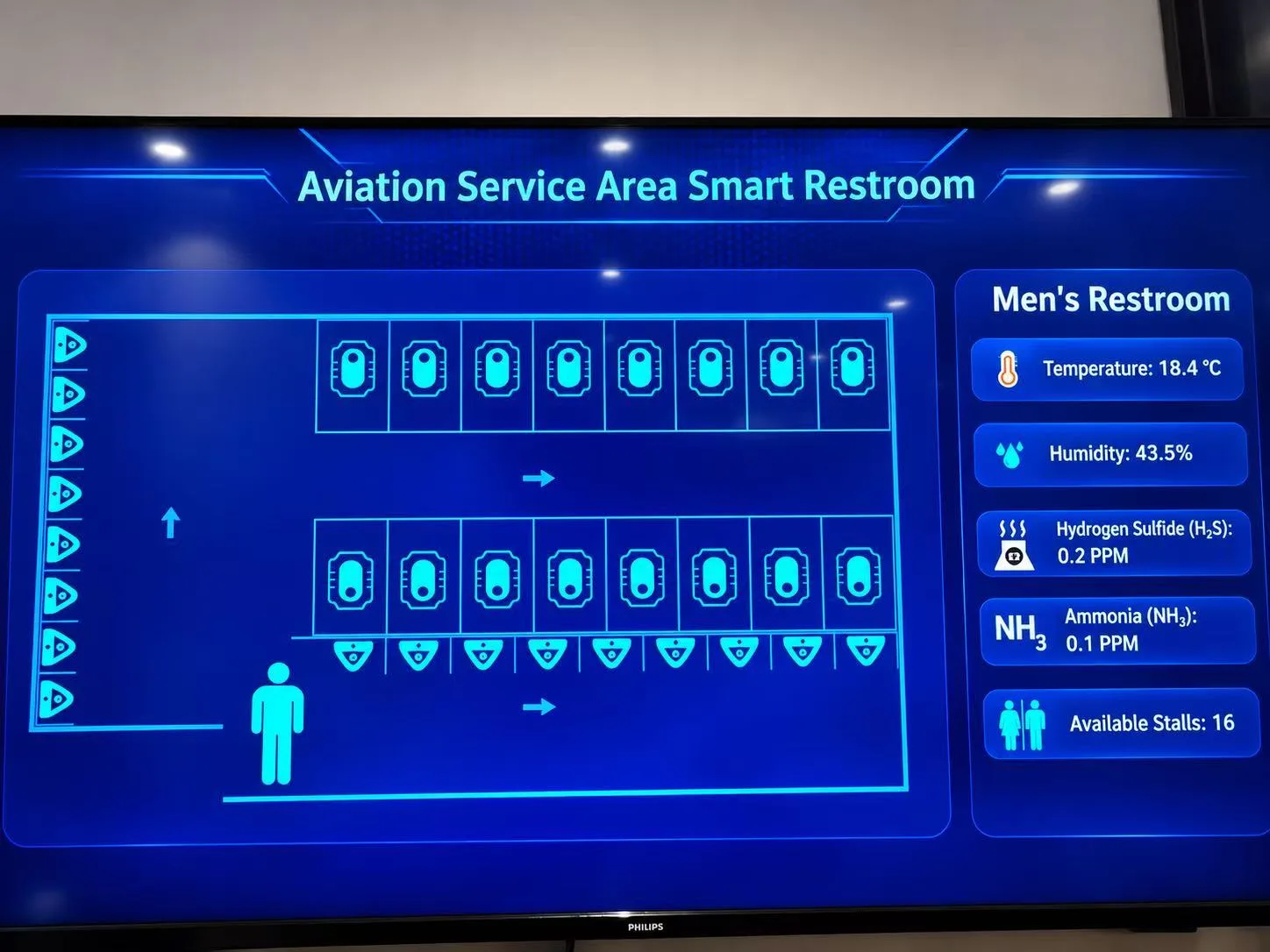
Aviation service area smart restroom – live stall map and men's restroom air quality, customised with X2VIEW. 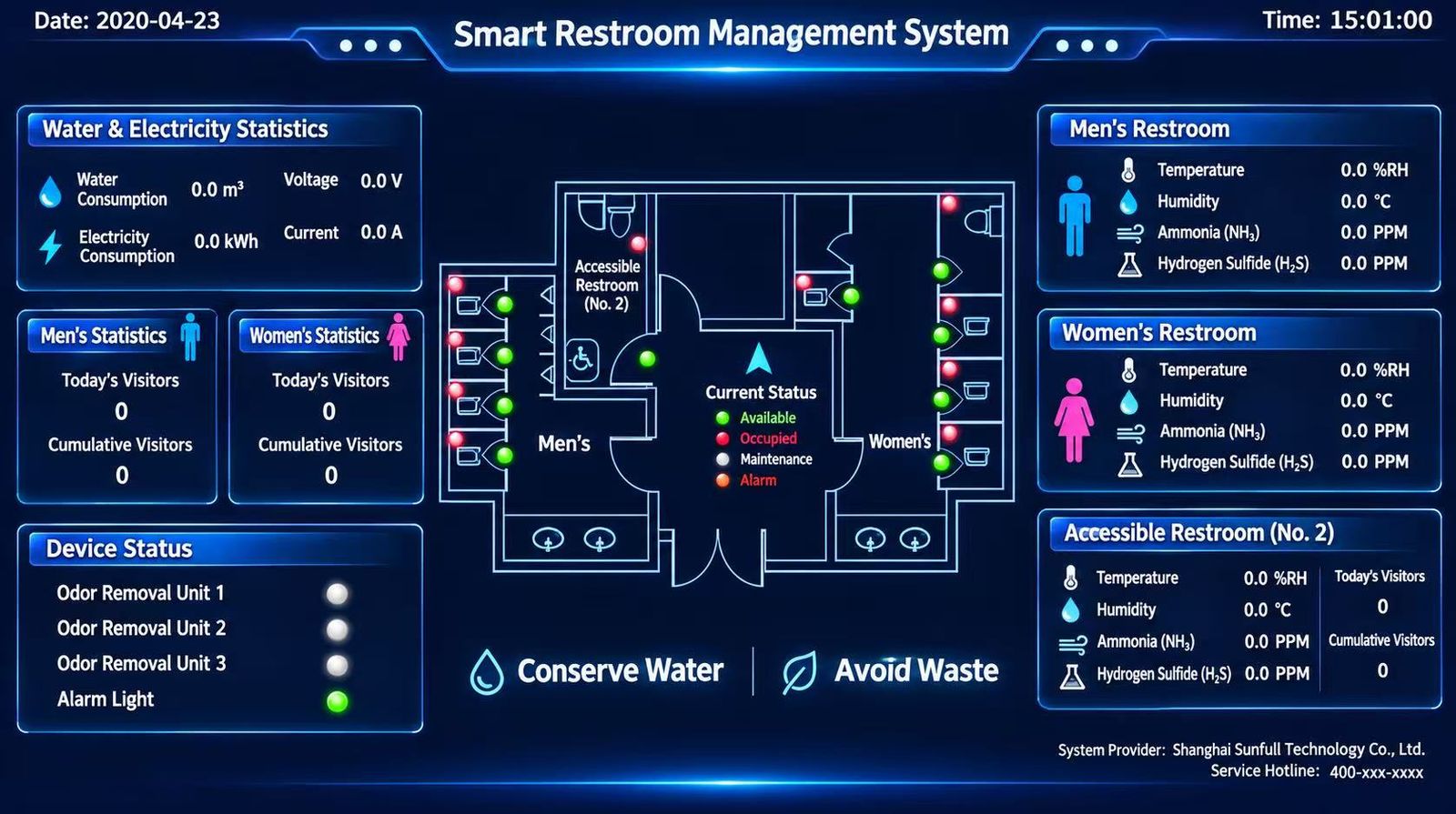
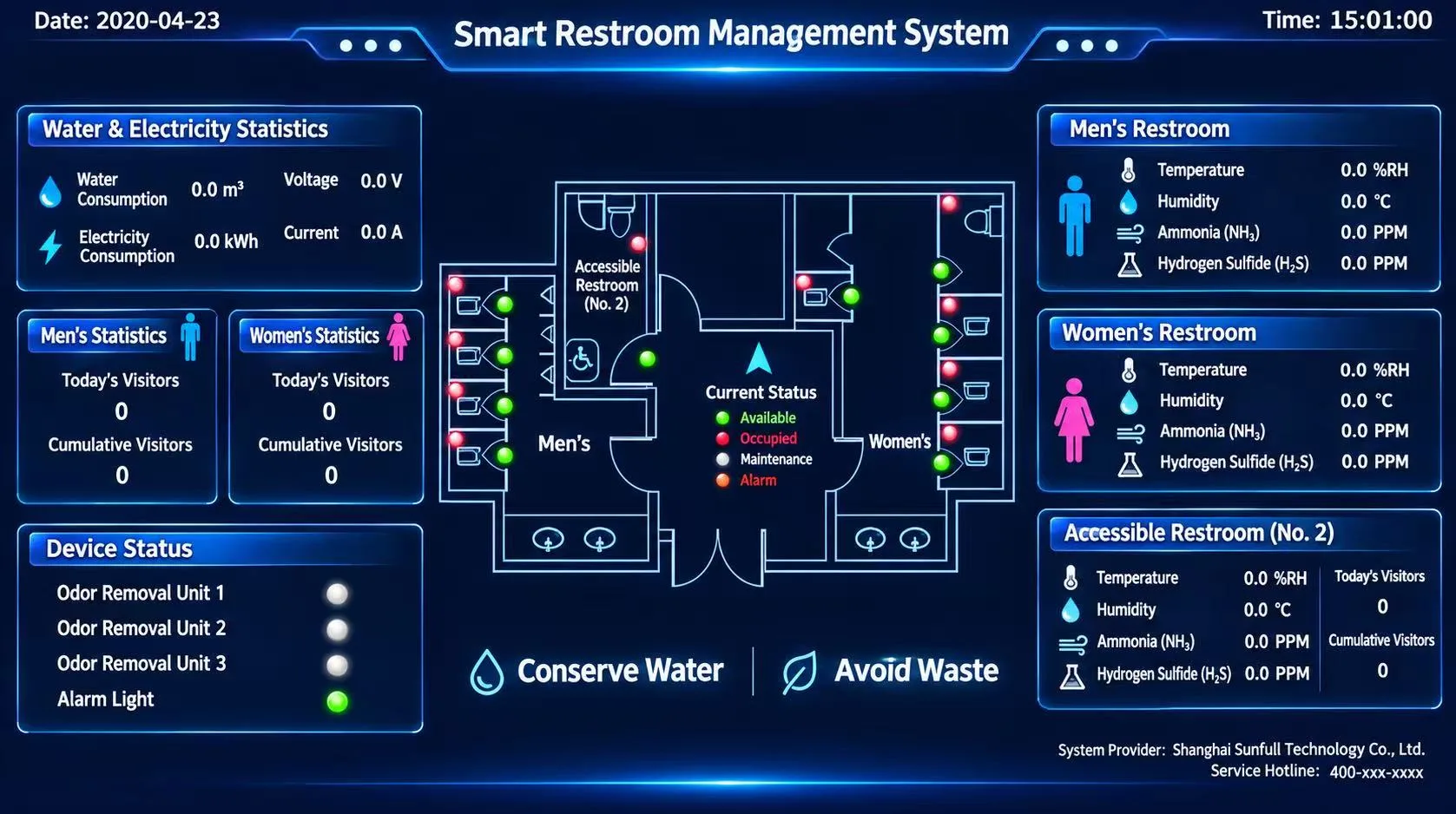
Smart restroom management system – floor plan with stall status, water and power use, visitor counts and odour removal units, customised with X2VIEW. 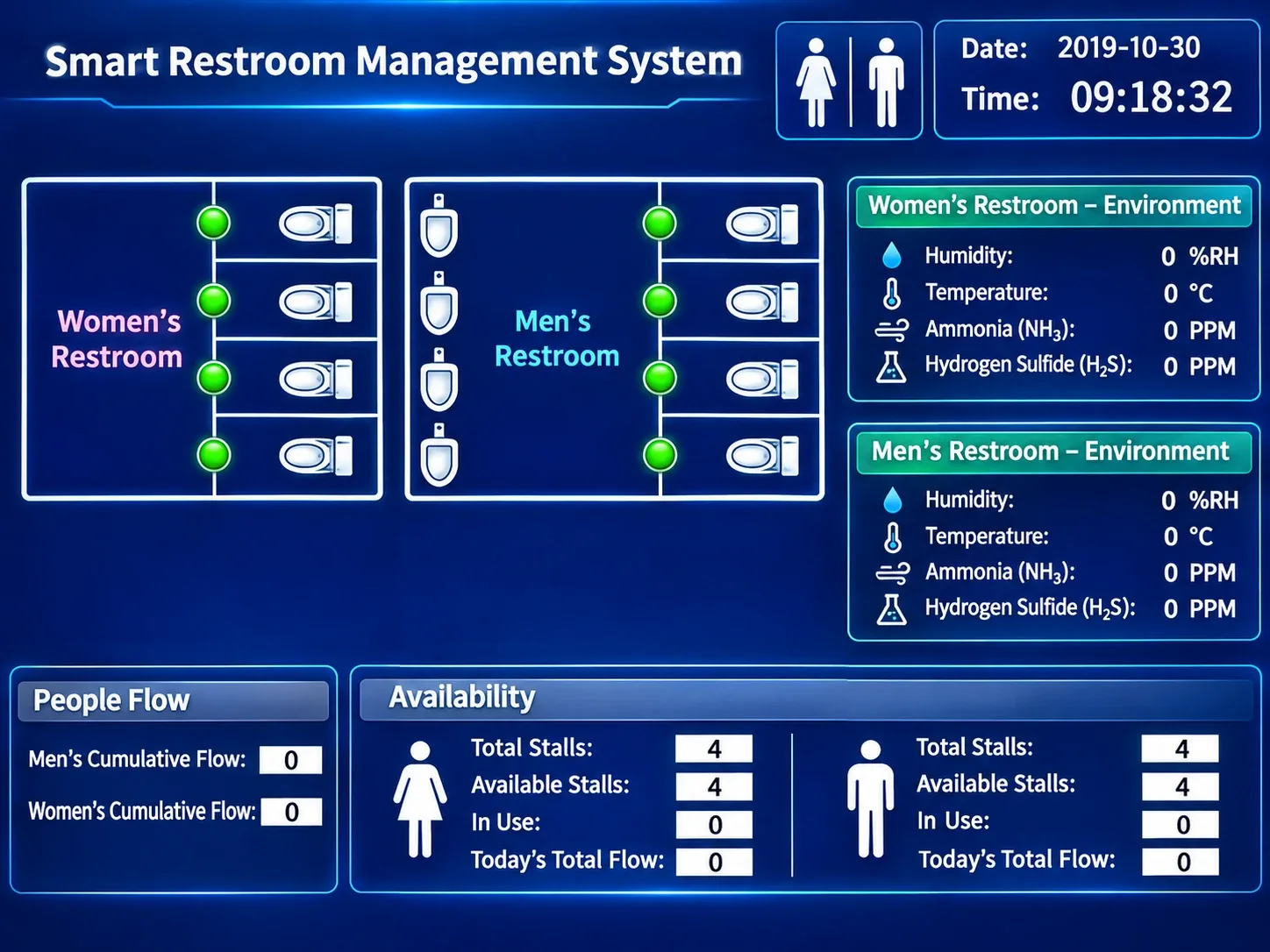
Smart restroom management system – stall availability, people flow and NH3/H2S environment monitoring, customised with X2VIEW.
Vấn đề của khách hàng
Các nhà vệ sinh công cộng truyền thống thường dựa vào lịch vệ sinh cố định và kiểm tra thủ công. Vì vậy, đơn vị quản lý khó có thể nắm bắt kịp thời tình trạng sử dụng thực tế cũng như điều kiện môi trường tại hiện trường, dẫn đến các vấn đề sau:
- Không thể điều phối vệ sinh theo nhu cầu thực tế: do thiếu dữ liệu thời gian thực về lượng người sử dụng và tần suất sử dụng, việc vệ sinh có thể không kịp thời vào giờ cao điểm, trong khi vào thời gian thấp điểm lại xảy ra tình trạng kiểm tra lặp lại và lãng phí nhân lực.
- Phát hiện mùi khó chịu chậm: các vấn đề về mùi do amoniac, hydro sulfide và các loại khí khác thường chỉ được phát hiện sau khi có phản ánh hoặc khiếu nại từ người sử dụng, ảnh hưởng đến trải nghiệm của người dùng và hình ảnh quản lý của cơ sở.
- Thiếu khả năng giám sát trực quan theo thời gian thực: đơn vị quản lý không thể theo dõi từ xa lượng người sử dụng, mức độ đông đúc và trạng thái vận hành của từng nhà vệ sinh, khiến tình trạng tại hiện trường thiếu minh bạch.
- Khó phát hiện kịp thời rò rỉ và mức tiêu thụ nước bất thường: các trường hợp rò rỉ liên tục vào ban đêm hoặc trong thời gian không có nhân viên trực có thể không được phát hiện ngay, gây lãng phí nước và thậm chí làm hư hỏng thiết bị, cơ sở vật chất.
- Hiệu quả quản lý nhiều địa điểm thấp: các nhà vệ sinh tại sân bay, trung tâm thương mại, khu công nghiệp, khu du lịch hoặc các dự án đô thị thường phụ thuộc vào việc kiểm tra thủ công từng địa điểm, làm tăng chi phí vận hành và kéo dài thời gian phản ứng khi có sự cố.
- Thiếu dữ liệu hỗ trợ ra quyết định: nếu không có dữ liệu về lượng người sử dụng, môi trường và mức tiêu thụ nước, rất khó phân tích quy luật sử dụng, tối ưu tần suất vệ sinh hoặc đánh giá chất lượng vận hành.
Tổng quan giải pháp
MILESGO gateways collect data from occupancy and people-counting sensors, ammonia / H2S odour sensors, water meters, LoRaWAN wireless sensors over LoRaWAN / Modbus RTU, and deliver it to the city IoT platform, a cloud platform (MQTT), SMS, email and messaging alarms as MQTT. Field equipment keeps its own protocol and control logic; integration is done by configuration and point mapping, not custom code.
Typical scope
- occupancy and people-counting sensors
- ammonia / H2S odour sensors
- water meters
- LoRaWAN wireless sensors
Protocol path
LoRaWAN / Modbus RTU → MQTT
Implementation checklist for the project manager
- Run a LoRaWAN coverage survey and pick the regional band (EU868 / US915 / AU915 / AS923 / KR920 / CN470) before ordering.
- Agree sensor positions (height, airflow, distance from doors and diffusers) so readings are representative.
- Define an alarm matrix (priority, recipient, escalation) and test every alarm end to end at SAT.
- Fix a site / asset naming convention before the first site so data from all sites can be compared.
- Roll out in phases: pilot one site or area, confirm data quality, then replicate.
- Check 4G signal and the SIM data plan at every site before committing to cellular backhaul.
Project deliverables
- Signed point table and protocol mapping
- Gateway configuration files and backups
- IP address plan and network drawing
- FAT and SAT test records
- As-built documentation and operator training
Kiến trúc hệ thống
Field layer: occupancy and people-counting sensors, ammonia / H2S odour sensors, water meters, LoRaWAN wireless sensors, connected over LoRaWAN / Modbus RTU. Edge and integration layer: MILESGO protocol gateways and edge controllers, mounted on DIN rail in existing panels, polling each device, time-stamping values and buffering them locally. Upper layer: the city IoT platform, a cloud platform (MQTT), SMS, email and messaging alarms, which receives the data as MQTT. Remote access for maintenance runs over VPN rather than open internet ports.
Thành phần hệ thống
- Field devices
- occupancy and people-counting sensors, ammonia / H2S odour sensors, water meters, LoRaWAN wireless sensors
- Edge / integration
- MILESGO protocol gateways and edge controllers
- Upper systems
- the city IoT platform, a cloud platform (MQTT), SMS, email and messaging alarms (MQTT)
- Tools and commissioning
- Web-based configuration, point table import/export (Excel), off-site simulation and on-site diagnostic tools
Năng lực phần mềm và AI
- Load and consumption forecastingTrong lộ trình
Các bước triển khai
- 1
Site survey and point list
Inventory devices, protocols, register maps, panel space, power and network paths.
- 2
Design and point table sign-off
Map every point to the target protocol and system; agree it with the client and the upper-system contractor.
- 3
Configuration and FAT
Build the gateway configuration off site, simulate it and test against the signed point table.
- 4
Installation and wiring
Mount gateways on DIN rail, wire RS-485 / I/O / Ethernet, apply the IP plan.
- 5
SAT and alarm tests
Verify values against local readings, test every alarm and command end to end.
- 6
Handover and support
Hand over configuration backups, point table and as-built documents; train operators.
Giá trị cho khách hàng
- Abnormal conditions seen early, before they become failures
- Alarms reach the right person by SMS, email or messaging apps
- Unattended sites supervised without permanent staff
- Data ready for cloud platforms and analytics
Các giải pháp khác trong Smart City & Municipal
Hãy cho chúng tôi biết về dự án của bạn
Gửi giao thức, số điểm dữ liệu và hệ thống đích. Một nhóm kinh doanh và kỹ thuật sẽ xem xét mọi yêu cầu.
Trao đổi về dự án